SXS, UTV, or Side-by-Side: Where the Terms Came From
The Evolution of Off-Road Lexicon: Tracing SXS, UTV, and Side-by-Side
Off-road terminology is inconsistent, and the terms SXS, UTV, and Side-by-Side confuse newcomers and experienced riders alike. Are they interchangeable? Do they mean different classes of vehicle? This post covers where each term came from and how they are used today.
Side-by-Side
The term "Side-by-Side" (often abbreviated as SxS or S x S) is the most descriptive of the three. It came into use to separate these vehicles from ATVs (All-Terrain Vehicles). Where ATVs feature a straddle seating position, Side-by-Sides offer bucket seating for two or more passengers seated adjacent to each other, much like a traditional car.
Early Side-by-Sides, such as the original Kawasaki MULE (Multi-Use Light Equipment) introduced in 1988, were primarily utilitarian. They were designed for ranching, farming, and industrial applications, emphasizing practicality, cargo capacity, and robust construction.
UTV
As the Side-by-Side market expanded, manufacturers began to emphasize the utility aspect of these vehicles, particularly those aimed at work and commercial applications. This led to the widespread adoption of the acronym "UTV," standing for "Utility Task Vehicle" or sometimes "Utility Terrain Vehicle."
Originally, UTVs were characterized by their emphasis on horsepower, torque, towing capacity, and cargo beds. They often featured lower top speeds and robust suspension systems designed to handle heavy loads. Brands like John Deere with their Gator series, and Polaris with their Ranger line, solidified the UTV branding.
SXS
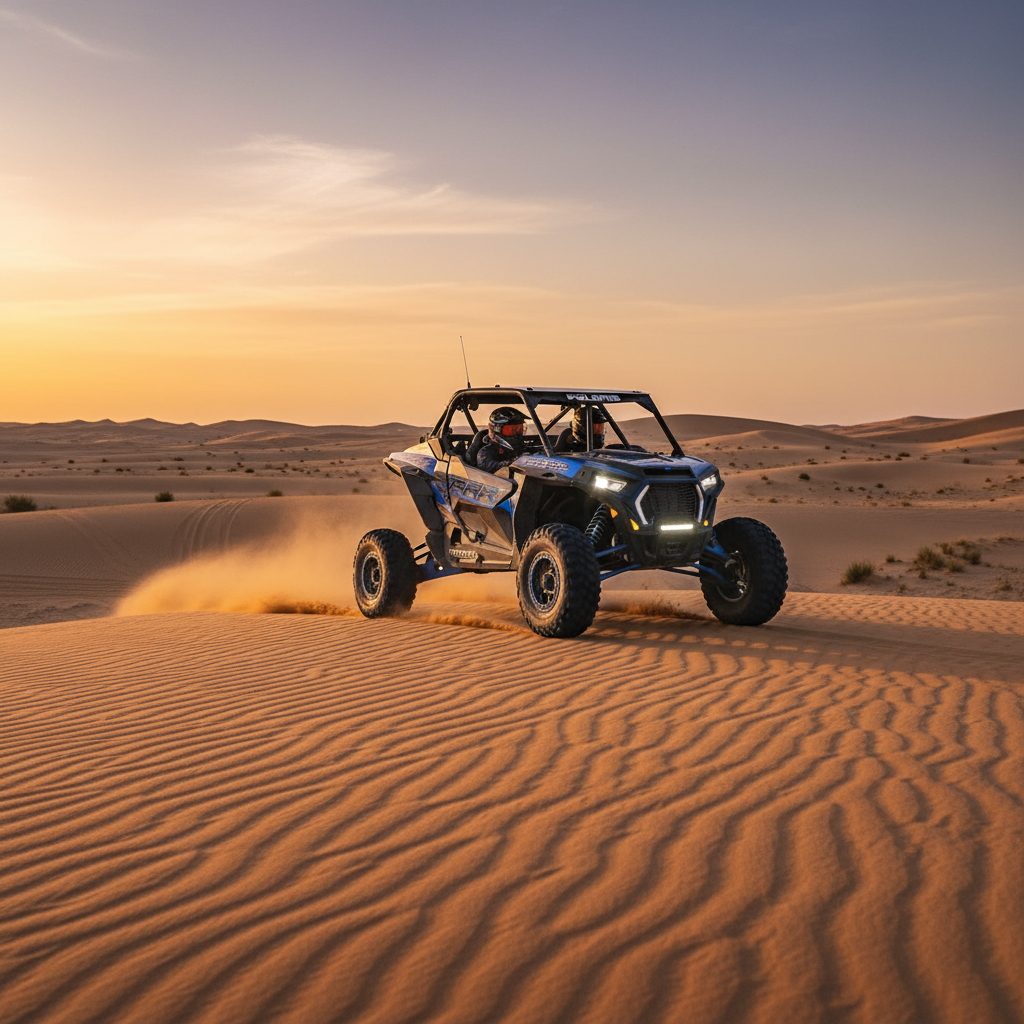
While "Side-by-Side" remained a general descriptive term and "UTV" carved out a niche for utility-focused models, the acronym "SXS" started to gain prominence as the industry pivoted towards more performance-oriented and recreational vehicles. As technology advanced, manufacturers began producing Side-by-Sides with higher horsepower, sport-tuned suspensions, longer travel, and aggressive styling.
These machines were built for dunes, trails, and racing rather than work. Sport became the selling point.
Work Versus Sport
Today, the lines between UTVs and recreational Side-by-Sides have become increasingly blurred. Many manufacturers offer hybrid models that blend utility features with sport performance. However, some general distinctions still hold:
- UTV (Utility Task Vehicle): Typically emphasizes torque, towing capacity, cargo space, and a work-oriented design.
- Recreational Side-by-Side/SXS: Prioritizes performance, speed, suspension travel, and rider experience.
"Side-by-Side" remains the overarching category for all these vehicles because of the seating arrangement. "SXS" and "UTV" often function as subcategories.
Where the Terms Stand Today
The three terms track how the market split. What began as a simple descriptive term ("Side-by-Side") branched into a utility-focused moniker ("UTV") and then saw the rise of a more general, performance-implying abbreviation ("SXS") as the sport gained traction.
Whichever term you use, these are the machines we work on. MST Motorsports services side-by-sides in Washington, UT. See our side-by-side and UTV service pages for what we do.
Related Services from MST Motorsports
MST Motorsports — 987 S 1900 East, Washington, UT 84780. Monday through Friday, 8:00 AM to 5:00 PM.
Call (435) 256-8899 · Text us · Book online.
Related MST Motorsports Services
Talk to the Shop
MST Motorsports, 987 S 1900 East, Washington, UT 84780
Monday–Friday, 8:00 AM – 5:00 PM